
🧠 The Beginners Guide On How To Teach English To Humans
It’s crazy that over 66,000 teachers have watched this training on Faceboo...
Once upon a time school was pretty boring. Yawnnnn.
But learning outside, well that was fun.
Soccer/Baseball stats? Check. Pokemon evolution? Check.
Hmmm this “games” thing really works.
So I started making games for learning “school stuff.”
And you know what, that worked too!
But … these games became a little too powerful.
So now they’re limited to VIPs.
You know, the ones who know how to use the power for good. 🙂
Choose your games wisely my good friend.
Want to be a VIP? Access to all these fantastic games is included with the Genki English Teacher’s Set
 TPR Warm up – the perfect start to every lesson, add new words every time.Lines Quiz – highly recommend for those with regular lessons.Mingle – the most effective way to make groupsOnline Video Workshop – the basics.
From then on choose a theme then a game to practise it
RECOMMENDED EFL ESL GAMES FOR KIDS
(with Japanese translations)
Good for big groups as all the kids get to practise at once ( and the teacher gets some time to check how the kids are doing or prepare the next activity!)
 Dinosaur Danger (I like + animals) 3 2 1 Jump (any vocab)Numbers GamesNemo Game – What can you see…?Harry Potter – very popular at the moment!How old are you? Bingo with a twist!Name Card Game(fantastic for jobs/occupations)I like pink fish (colours and adjectives)Genki English Mini CardsDo You have a ….? GameThe Gokiburi GameIsland Hopping – picture card review gameTimebomb (numbers and brain power)
Conversation EFL ESL Games
These are games where the kids have to use questions / answers, and practise sentences as opposed to simply learning vocab. If you teach in Japan, where kids can already understand several hundred English words, they are recommended to help the kids see how these words fit together.
Doctor, Doctor! (for practicing parts of the body!)Lines quizStopwatch gameBargainingWhat Time is it Mr Wolf?Members’ Worksheet Games
These are printable worksheets/games to go with the Teacher’s Set.
Animals Card GameSpaghetti Worksheets (listening quizzes)Islands worksheets (for younger learners)Snakes & Ladders (topic review)8 sided dice (nice craft idea)Fun with Mido!
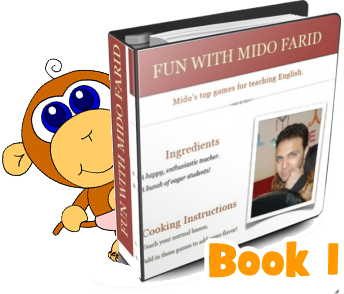
 Mido Farid has a new game for your every Monday.
If you can’t click them all right now, sign up for the Genki English blog and get a brand new one delivered each week!
VIP Members can also download all Mido’s games in his brand new ebook!
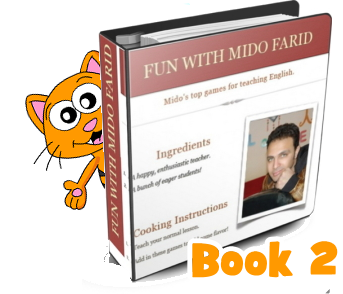
Coming Soon
BRAND NEW on the NEW VIP GAMES MENU.
Hop like a frog – flashcard reviewDanger Island – a Treasure Adventure!Circle My Clothes – clothes review!Other Readers’ EFL ESL Classroom Games
Dice attack! – Halloween or any review!“Soldiers & Ninjas” “All change” ( fruit basket )More Readers’ Games
 “Famous People Cards”
Genki English Vocab practice games
– all with Japanese explanations!
(use any of the vocab from my Yearplans page!)
Some of these games only need 2 or 3 players. For larger classes, once you’ve done a demo at the front, split the kids into 3 or 4 groups, put them in a circles and the kids take turns in going to the middle to play.
Sticky Fingers Game (very easy, no preparation)The Hammer Game!Mr Bump Game!Roger’s PDF Worksheets & Games
NEW: List of Simple Ice Breakers
Misc. EFL ESL Games
Kanji Making Gameor VIP members can now download the brand new Top 50 Games eBook!
Games:
 Choose a target theme from the Curriculum, then a game to practise the English.
Learn & Play: Before you play these games you will need to make sure the kids have a basic grip on the target English. The kids have to have fun, but they also have to be progressing with their English skills.
Songs instead of drilling: Drilling can be boring, but songs with actions are a fun alternative.
Set the level: A game for a game’s sake is no good – choose a game that will let them practise their target language. If it’s too easy or too difficult it won’t be very effective!
Motivation: Games provide extra motivation to learn the target language – learn the new language, win the game!
Everyone: Good games allow the kids to practice with their peers – the best games allow all the kids to speak at once.
It’s the kids: The lessons become less teacher orientated and more student orientated.
Fun: And the biggest advantage of using songs with games is that they are FUN!!
They become so engrossed in the game that the English becomes second nature. It’s a bit like driving a car, what you concentrate on is the road, the skill of moving the pedals becomes second nature through practice.
Good losers: Sometimes kids might get fed up if they lose a game, or other kids might tease the losers , in this case you must teach the kids Genki English Rule No.2:
“Losing” doesn’t mean “losing”, it just means “try again!”
You never truly lose until you stop trying.
If everyone is having fun, everyone is a winner!
Rule No.1: Genki English rule No.1 is
Think “I can do it!” and you can!
Let the kids know it’s not brain surgery, it’s just English and is one of the easiest subjects they’ll learn at school.
Mistaikes: Just like baseball, practice is the key. But unlike music education where “only perfect practice makes perfect” in these games the kids have dozens of chances to make mistakes and perfect their English.
Lego: Each of the themes is structured so that kids can chop and change, build and rebuild new English just like in a Lego set.
The Next Step: Then you can add connector words like “and” or “but” and join the bits and pieces together to eventually lead up to where the kids can say anything they want to say in English. It won’t be 100% correct, but they will be able to get their message across, and that’s an important milestone.
Easy Planning: Nearly all of these games are illustrated with photos of them being used in the classroom. For teachers in Japan there are translations into Japanese – simply hand a copy to your teacher for easy lesson preparation!
Espanol: But it’s not just for teaching ESL or English, nearly all these games work great for teaching ANY language.
45 Mins: Have a look at my lesson plan page to see how to fit these games into your classes.
The theory: Or for an academic look at the advantages of using games in class, have a look at Joel Bacha’s paper on “Play and Affect in Language Learning”
| Try all the Genki English Picture Books… | ||
|---|---|---|
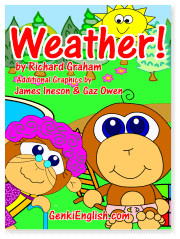 Weather |
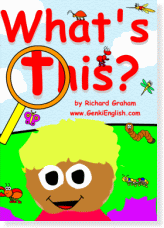 Bugs |
|
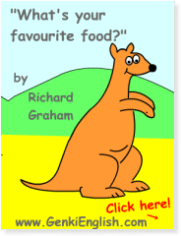 Favourite food |
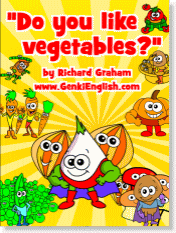 I love vegetables |
|
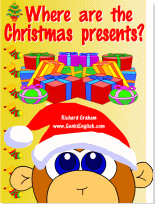 Christmas presents? |
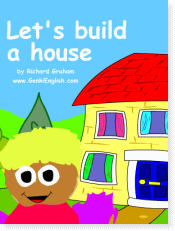 Build a house |
|
 Days of the Week |
 Baby Monkey on Tour |
|
 How are you? |
 What sports do you play? |
|
 How old are you? |
 Transport |
|
 Happy Halloween |
 Winter Clothes |
|
 Easter Egg Hunt |
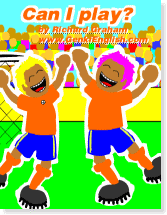 Soccer / Can you …? |
|
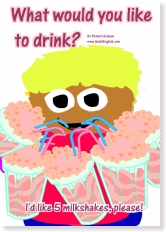 Drinks |
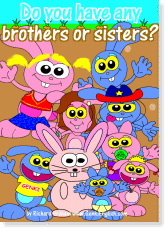 Brothers & Sisters |
|
| Keep checking back, there are more to come soon …. |
||
VIP Owners Click Here for the NEW VIP GAMES MENU.
If you’re not a VIP Owner yet, access to all these fantastic games is included with the Genki English Teacher’s Set!